Perceptions of Dew Pont
What Egyptian Hieroglyphs Cry About When They Laugh
John 4:44 (KJV):“For Jesus himself testified, that a prophet hath no honour in his own country.”
Using this verse as my foundation, let us continue.
In the Russian language, the word prophet sounds like Pro-Rock.
Once, I explained to Russian-speaking readers that in the Bible, rock is not a stone, but a book—a scroll that is rolled back and forth in order to read the same verse again and again. It is rolled back and forth much like a child’s wooden rocking horse.
And so they heard that the rocking action belongs to the book—the scroll. Therefore, in Russian, Pro-Rock.
But there is another Russian word: Po-Rock, meaning vice—a defect of character, such as greed, cruelty, or foolishness.
And, of course, the states Po and Pro are opposites.
For example, po techeniyu means with the flow, whereas protiv techeniya means against the flow.
Thus, in Russian, the very word prophet—Pro-Rock—symbolizes an understanding of the Book that goes against the current.
The verse to which I have directed your attention is important in this chapter about people’s recognition of the quality of water. Yet no one who refuses to swim against the current, choosing instead to drift with it, is capable of judging the quality of that water.
The unwillingness to change the direction of one’s life, even while knowing that one’s life is being carried by deception, is precisely Po-Rock—the opposite of Pro-Rock.
And, of course, when I spoke about the flow of the river of life, I was speaking about the current of thoughts.
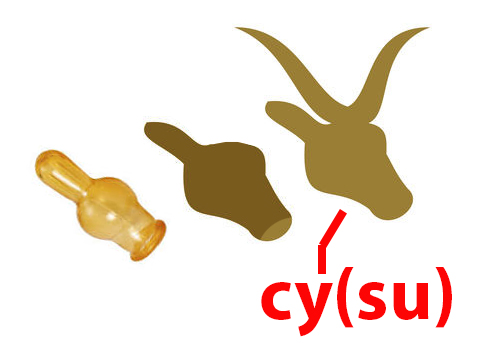
We shall now need the hieroglyph that I have labeled according to the way the world will read it in the texts—SU. One of those texts will greatly surprise you later in this chapter, but first let me share the story behind it.
This hieroglyph did not reveal itself easily. What you see here is the head of a cow, but deliberately stylized to resemble a baby’s pacifier.
Unless one places an actual pacifier beside the image for comparison, those who simply go with the flow refuse to see it. Yet the essence of this hieroglyph could only be discovered after recognizing this very object—a pacifier—within it.
If others are to trust the quality of the water, it is important that they, too, clearly see not only the head of a cow, but also a pacifier at the same time.
I was working on deciphering texts in which the paired hieroglyph SU/VK (the same sign viewed as its mirror image) appears. In its standard form, the hieroglyph is simply the head of a hornless cow. In that form, its essence is much more difficult to grasp. One can arrive at it only by understanding that the Red Heifer is the Torah itself, which, in its essence, was likewise intended to serve as a kind of children's pacifier during humanity's period of spiritual infancy.
I saw the pacifier from the very beginning, even in the standard form of the hieroglyph, yet for many years I could not grasp its central meaning. I had already deciphered and published the other lines of the Codex of Radomir, but the line containing this hieroglyph remained beyond my reach. Individual words became clear, yet without this crucial hieroglyph they refused to unite into a single coherent meaning.
Then, quite unexpectedly, just this week, I happened to hear the Ukrainian word pustushka, and immediately remembered the old Russian folk name for a pacifier—pustyshka. The word itself tells us that the object is empty—it is not filled.
At that very moment, the essence of the hieroglyph became instantly clear, together with its two possible readings.
If, conventionally speaking, the cow’s head is turned so that its right eye is visible, the hieroglyph is SU.
If its left eye is visible, it is VK.
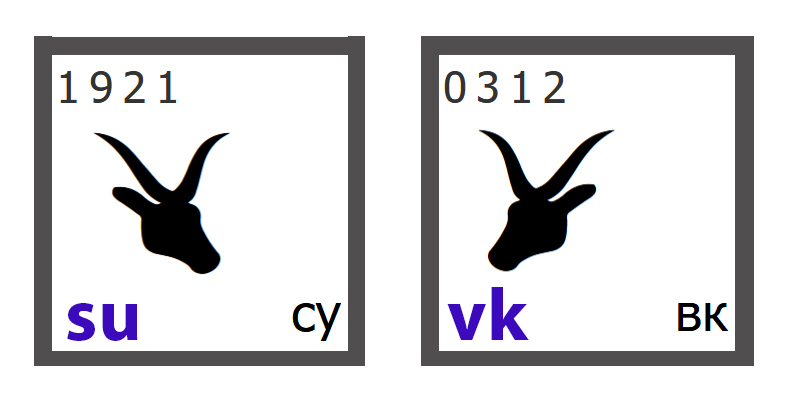
SU and VK are related mind-forms that share the same fundamental concept of emptiness. However, they express opposite aspects of that concept. The essence of the SU hieroglyph is the gathering of something into an unfilled space, whereas VK represents the complementary aspect of emptiness itself.
Substitute — one thing takes the place of another and fills a position that has become vacant.
Substitution — the act of replacing something that is absent, removed, or no longer able to occupy its former place.
Succession — the process by which one person follows another and occupies the place left behind.
Successor — a person who assumes the position vacated by a predecessor.
Supply — to provide what is missing and thereby fill an existing need, shortage, or deficiency.
Supplement — something added in order to fill a deficiency, complete what is incomplete, or occupy a remaining gap.
Support — something placed beneath or alongside another object to fill the absence of sufficient strength and prevent it from falling.
Surrogate — a person or thing that occupies the place of another and performs a role that would otherwise remain vacant.
Suspend — to hold something above the ground or another surface, leaving an empty space beneath it.
Suction — the movement of matter into a space in which the pressure has been reduced, as though an artificially created emptiness were drawing it in.
Sump — a pit, hollow, or low reservoir deliberately left available so that water or another liquid can collect within it.
Podsuropit (Russian) — to leave or move away, thereby freeing one's place for someone else. An occupied place becomes empty and available.
Podsunut (Russian) — to slip or place something into an available space. The action consists of filling an existing emptiness.
Sumka (Russian: bag) — a container whose very purpose is to provide an empty space waiting to be filled. Its essence is not the material from which it is made, but the void it is designed to contain.
Sushka (Russian) — a traditional Russian ring-shaped baked product. Its defining feature is the empty hole in its center—an intentionally preserved void.
This same VK sound-form can be heard in the words:
Vacuum (VK) — an empty space from which matter has been removed.
Vacancy (VK) — an unoccupied place or position waiting to be filled.
Evacuation (VK) — the process of removing people or matter from a place, thereby leaving it empty.
The letters highlighted in bold represent the pronounced sounds rather than their exact spelling.
I believe you are now ready to examine the text itself with close attention.
Some of you, recognizing the significance of the prophecy, will begin analyzing the text in an attempt to understand the outcome of such a devastating conflict—and I must say, this is an entirely reasonable decision.
For the solution is indeed given in this very line; it is simply addressed to those for whom it truly matters.
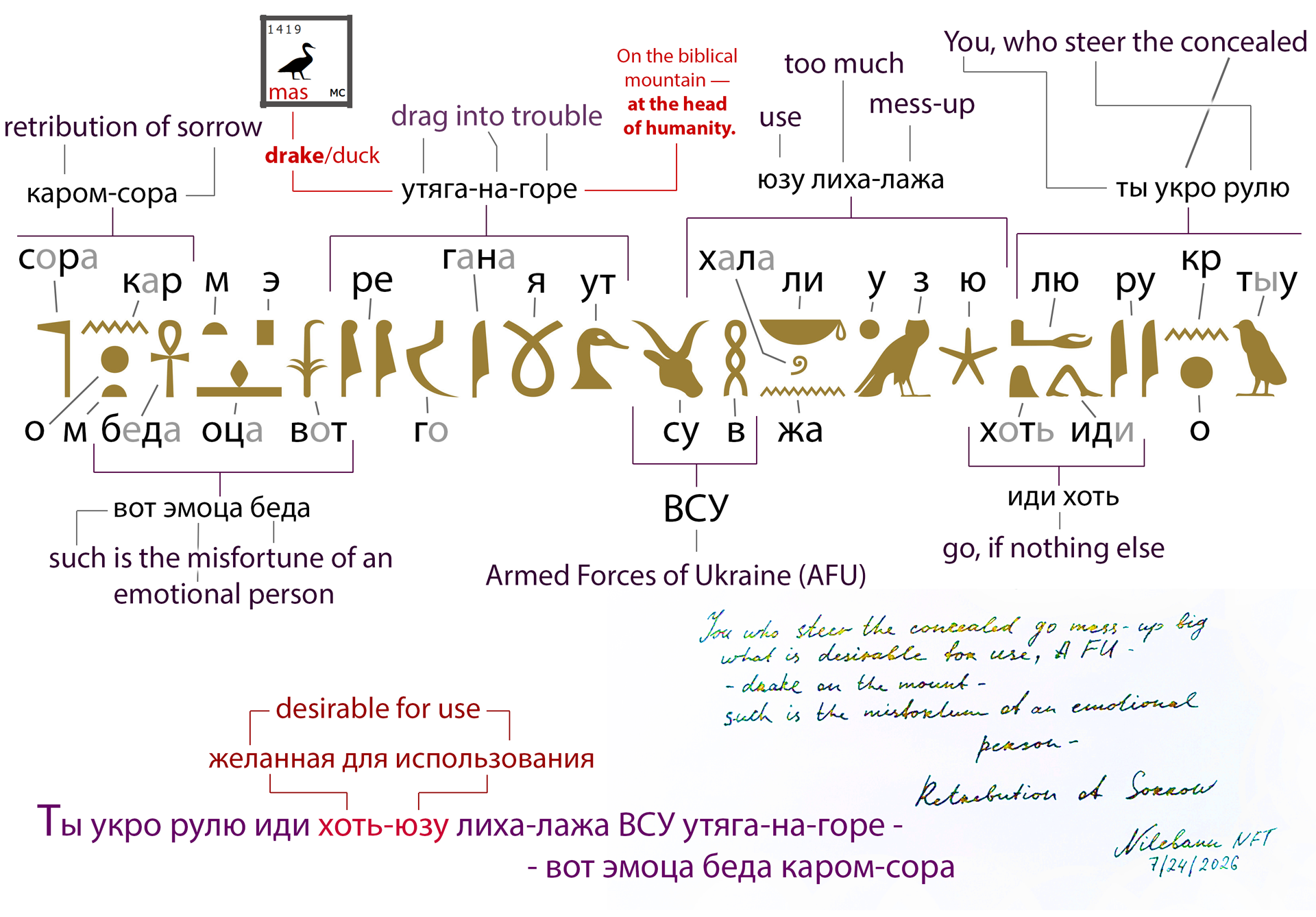
You who steer the concealed go mess-up big what is desirable for use, AFU - drake on the mount - such is the misfortune of an emotional person - retribution of sorrow
Yes, indeed. Who among you will be able to accept that what you have just read is a line from a text written with exactly the same Egyptian hieroglyphs, in exactly the same language, and even in the same style as the ancient Egyptian texts?
The only difference is that this particular text was written by my predecessor in 1977. As you have already understood, this specific line refers to the present-day events of the war in Ukraine.
The trolls, of course, claim all sorts of things. Some insist that I wrote the entire text myself. Others shout that it is nothing more than graphic art, created without any connection whatsoever to the Egyptian texts—a mere parody of them, suitable only as wallpaper.
Naturally, it is unpleasant for me to read such comments, knowing the history of these texts firsthand. Although I was only five years old at the time, I remember my conversation with my predecessor quite well.
He wrote these texts in order to make the task of reconstructing the table somewhat easier. After all, people visiting Egypt almost never photograph an Egyptian inscription from beginning to end. He knew that, in order to reconstruct the system, I would one day need complete texts.
Moreover, the professional animation artist whom my predecessor hired—the very same kind of artist who, at that time, was drawing Egyptian hieroglyphs for the animated film The Mystery of the Sphinx—also drew the hieroglyphs that Radomir later used to write his Codex.
I would not need to convince the Freemasons that what I am telling you is true. They know the famous French singer with an American passport who, during his short life, wrote numerous books under different pseudonyms and in several languages. He also produced films, yet never once signed any of his works with his real name. Nevertheless, all of his works are inseparably bound together by a single thread: every one of them is nothing less than a precursor to the biblical revelation.
I know, for example, how to prove that The Lord of the Rings and the first Dune novel were, in fact, written by the very same author who wrote the Codex of Radomir—and not by the authors who merely play their respective roles so convincingly.
You may, of course, ponder for yourselves why Bilbo introduces Aragorn as the co-author of his own book under the name Dúnadan. Yes, that is an important clue binding both books into a single mystery. After all, Dúnadan can quite literally be read as “the one who wrote Dune”… and from there, I shall leave the rest for you to discover.**
But you do not have the time to follow the trail of how the true author nevertheless revealed his own identity within these works. And I have no desire to divert your attention from what is most important to understand right now.
And so I am forced, first of all, to ask you to look carefully at that pacifier hieroglyph and pay close attention to one simple fact: pacifiers of that particular design stopped being manufactured and sold in the very year the Soviet Union collapsed.
Consequently, if the task was to depict a hieroglyph in the form of a pacifier, only a graphic artist living in the Soviet Union could have created precisely this particular version of the hieroglyph.
Oh yes! What a premiere that was!
The hieroglyph we have just examined so carefully, together with the text we have just read, finally made its first public appearance on my Telegram channel, Ur Al. As I explained, one must see not only the head of a calf but also a pacifier, and pay special attention to the fact that the horns are turned in such a way that, if you look at the hieroglyph as the head of a calf, the horns point backward. But if you look at the same hieroglyph as a pacifier, the horns suddenly become sharp spikes threatening the eyes of whoever would put that pacifier into their mouth.
And at that very moment, many people—even some of my most devoted students—immediately felt the urge to tell me how disappointed they were and began flooding me with photographs of horned animals that had similarly shaped horns. Mountain goats, antelopes, yaks—there was hardly a horned animal that they did not send me.
Alas, such is the standard pattern of thinking instilled in us from childhood: compare visual features, find whatever looks most similar, and once you have found something that resembles it—even if an obvious calf has somehow turned into a mountain goat—confidently defend your conclusion without the slightest hesitation.
And if you still have not understood the principal criterion by which the author of the Egyptian texts selected particular images, that hardly matters. After all, searching for pictures and comparing them is something we all know how to do.
I should say, I have more than enough trolls — enough that someone else would probably not be able to endure them. Yet I still hope that even a media activist — perhaps paid by the master sitting behind the steering wheel of a long-haul dump truck — though spiritually carefree, may nevertheless one day realize that there is an alternative to everything, even to the unwavering devotion with which one clings to the dogma of one’s master.
Of course, one can only hope that those for whom it truly matters will realize on their own that if a key word in an important text is “to steer,” then it was most likely chosen as a signpost in their search for the Grand Driver.
So what is the significance of those horns? Why did the author of the Egyptian text deliberately turn them that way?
The answer is that every horn depicted in an Egyptian text represents a Pont.
Thus, when humanity regains the ability to see words rather than merely read them, words containing the mind-form of Pont—such as Pontifex, Pantocrator, and Pontius Pilate—will reveal the presence of ponti-antlers.
This is, in fact, why Moses is so often portrayed with horns—they are Ponts.
As for the cranberry needed to understand this, take a look at the antlers of a red deer while they are still covered in velvet. Those are called ponts. Yet it is not the case that two antlers equal two Ponts. Every individual tine ending in a sharp point is itself a separate pont, each representing a distinct connection—like a pushpin on an investigator’s board, linking scattered fragments of information into a single coherent picture.
Perhaps the most remarkable misconception around which much of the subsequent narrative of this book will be built concerns the so-called Triad Statues.
Soon you will know what the Egyptian texts carved on the pedestals of these statues actually say, but one important feature concerning the horns on Hathor’s head must be revealed in advance.
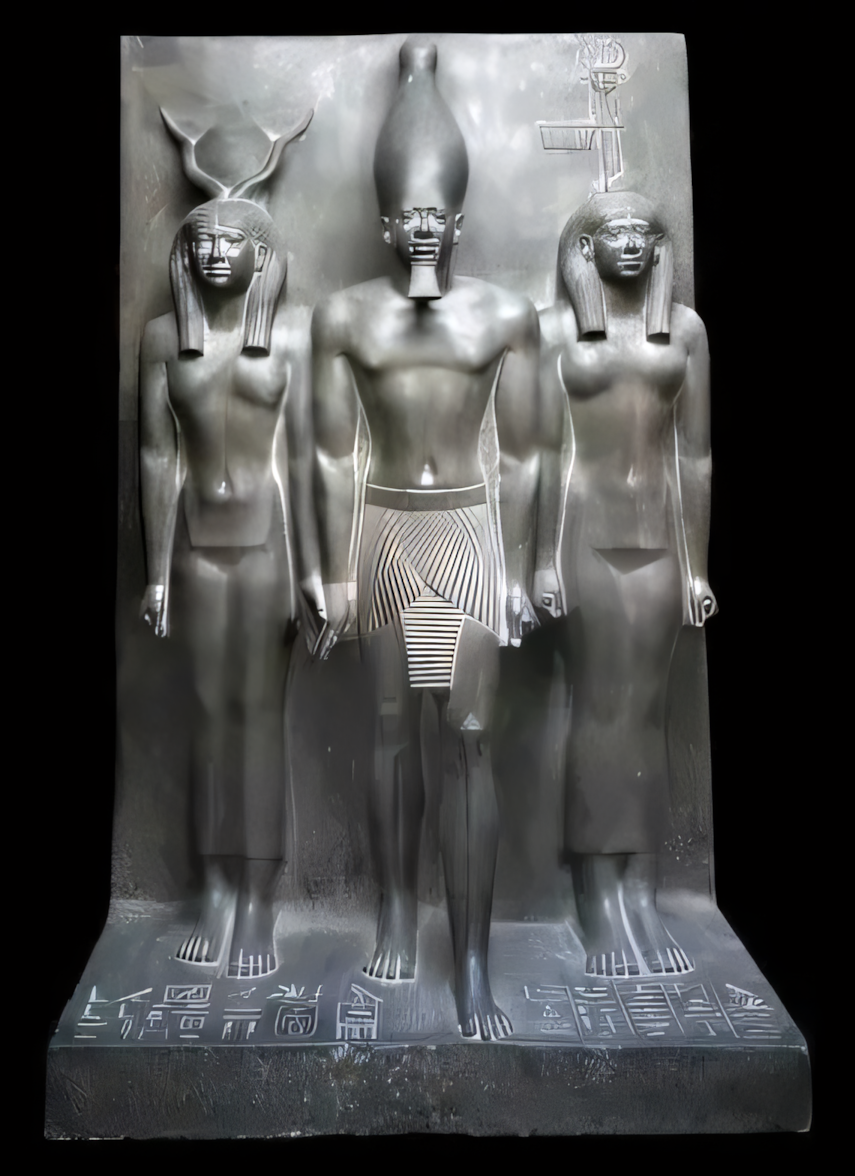
Hathor is associated with a cow because there are frescoes that deliberately lead the viewer toward that association. As a result, it has automatically become accepted that the horns on Hathor’s head—the very horns between which the solar disk is depicted—are the horns of a cow.
There are many breeds of cattle, and the horns of different breeds vary considerably. Undoubtedly, there are even highly exotic breeds with highly unusual horns. Yet it is important to understand that the Egyptian author was not depicting the horns of some obscure breed of cow on Hathor’s head, because doing so would not have conveyed any meaningful idea.
If, however, one examines her horns carefully and without prejudice, and simply asks whose horns they actually are, then there truly is meaning in that question.
The answer is not difficult to recognize if one imagines that the solar disk conceals precisely those features that would otherwise make a deer’s antlers immediately recognizable.
The meaning intended by the author is as follows.
Son is the most important object in the Bible. At the same time, it is part of the Celestine design that the Son of God and the Sun are pronounced identically in English. That is the key.
But in order to use that key, we must first understand the thought-forms underlying the Russian word for the Sun — Solntse.
It would perhaps be more accurate to define the essence of the SL mind-form not simply as obscurity, but as the inability to see what lies beyond. Obscurity occupies the very center of its semantic cloud.
Consider the following examples:
Slepoy (слепой — blind) — one who cannot see.
Slon (слон — elephant) — an elephant conceals whatever stands behind its enormous body.
Soul (англ. soul — душа) — hidden behind the veil of material reality, and therefore invisible.
Slovo (слово — word) — the overall meaning conceals the essence of the individual images from which the word is composed.
Slavery — the inability to see the mechanism by which one becomes dependent. A slave is a person who does not see that every loan he takes brings him one step closer to permanent slavery.
The most important example, however, is the biblical Sun.
Solntse - The biblical Sun is not merely something that blinds the eyes. It truly conceals the mystery of what lies beyond it. It functions as a veil. It hides what is behind it.
It would seem that everything has now become clear. The antlers of the biblical Grands have acquired a certain clarity.
And yet, much remains unsaid.
We are still far from approaching the revealing lines of what this entire Celestine creation is actually about. Are some simply supposed to light candles and recite prayer books aloud? Texts are texts, but should we not first understand what purpose God is pursuing in all of this before we go any further?
The unified field of consciousness of all humanity is to God what our own body is to each of us.
Our global organism suffers from a serious illness, with its causes still unexplained and its symptoms visible to everyone. The Egyptian texts are, in a sense, the medicine intended to heal it, if they are taken seriously—and soon.
And you know, throughout our work together, we should not limit ourselves to mechanically deciphering the Celestine mysteries. I would like us to remain living human beings as well, speaking honestly with one another about what is actually happening in our own lives. Otherwise, it will never become clear that both God and the author of the Egyptian texts—and of the Bible—are far closer to us and to our real problems than anyone has ever imagined.
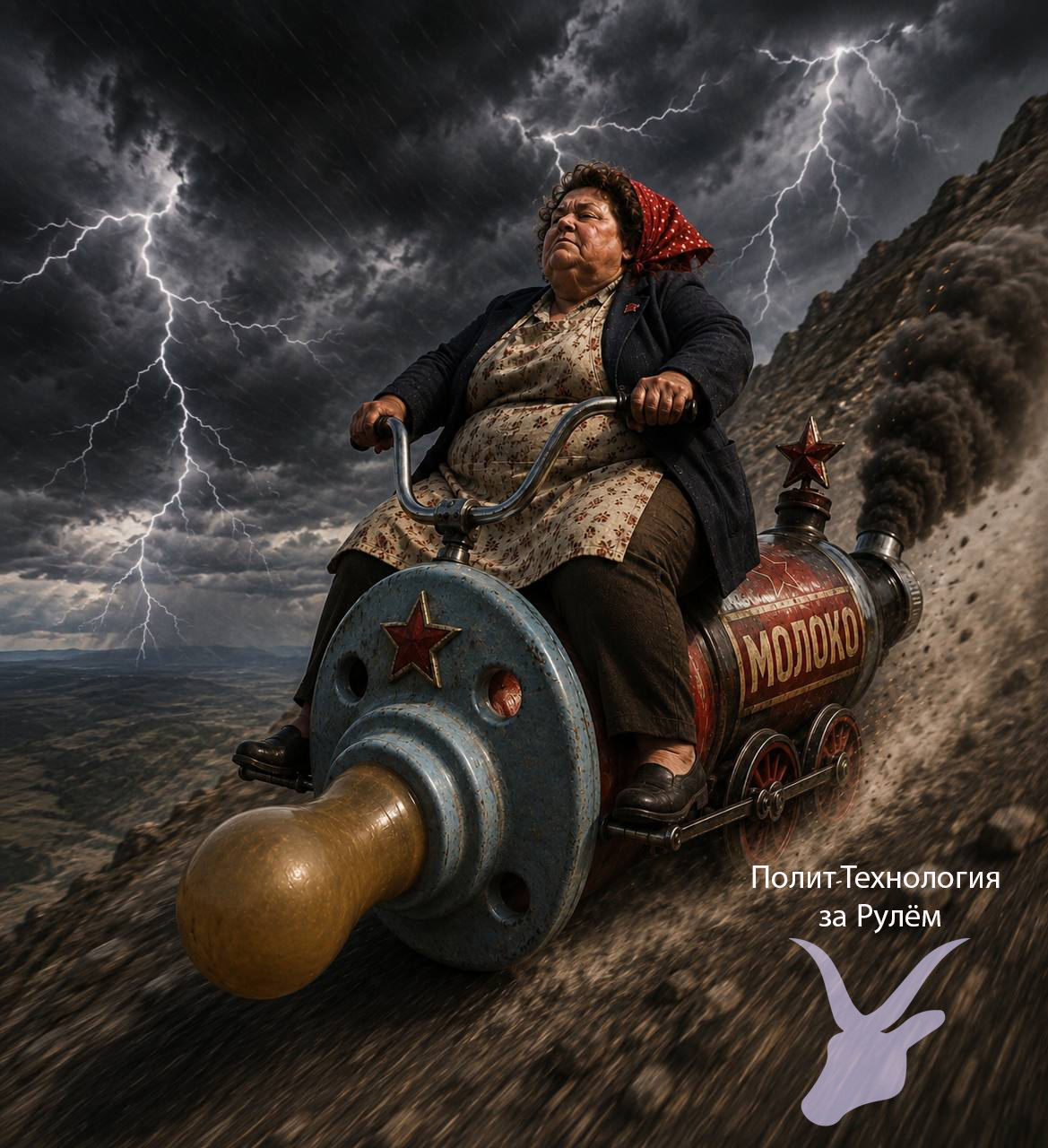
The pacifier, the bicycle handlebars, the peculiar words—they all point toward a particular individual, unknown to the public, whose actions seem insignificant but, over time, carry planetary consequences, while the true nature of that influence remains almost entirely unnoticed.
One word from a Grand Master of the new USSR, and the underlings craving bogus initiations are ready to do everything to ensure that the world never learns how to read the Egyptian texts. At the same time, he truly is the first genius who was able to appreciate the significance of what he sentenced to a lifetime shadow ban.
I did not write that the initiations are bogus to offend anyone’s feelings. That word cannot be replaced with another one, because there is no point in initiations if the main purpose of Freemasonry, which is directly connected to an event impossible without reading the Egyptian texts, has already been destroyed.
How else could the author of this prophetic Egyptian text have quietly hinted that the Venerable Builders should open their eyes and recognize a bicycle’s handlebars—particularly appropriate in today’s fuel situation—in place of the very ponti-antlers whose true essence is all-encompassing understanding, something every builder of the Temple would do well to cultivate?
Andrei Bannikov. “Introduction.” Praeludium for Vatican. Digital First Edition. 2026. https://praeludium-book.com/chapters/introduction.html